rail operating centre
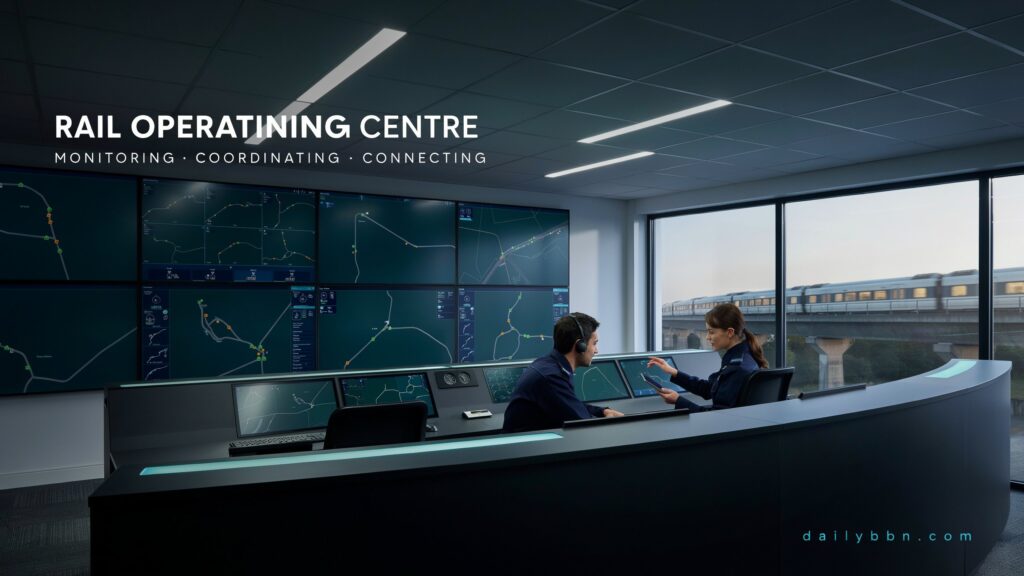
rail operating centre
Modern railway systems rely on advanced technology to keep trains running safely, efficiently, and on schedule. Behind every successful rail network is a central facility responsible for monitoring train movements, responding to incidents, and coordinating daily operations. This facility is known as a Rail Operating Centre (ROC).
The term Rail Operating Centre is widely used in the United Kingdom, where Network Rail introduced centralized control centers to replace hundreds of smaller signal boxes. Similar facilities also exist in the United States, although they are commonly called Rail Operations Centers, Dispatch Centers, or Operations Control Centers.
Whether managing passenger trains or freight rail services, a rail operating centre plays a critical role in ensuring safe transportation while improving communication between train operators, dispatchers, maintenance teams, and emergency responders.
In this guide, you’ll learn what a rail operating centre is, how it works, the technology it uses, and why it has become an essential part of modern railway operations.
What Is a Rail Operating Centre?
A Rail Operating Centre (ROC) is a centralized control facility responsible for supervising railway operations across a large rail network.
Instead of controlling only one station or a small section of track, a rail operating centre manages multiple railway routes from a single location. Highly trained operators monitor train movements, control railway signals, coordinate maintenance activities, and respond to service disruptions in real time.
By bringing multiple operational functions together under one roof, rail operators can improve communication, reduce delays, and enhance overall network safety.
How Does a Rail Operating Centre Work?
A rail operating centre combines advanced technology with experienced railway professionals to manage daily train operations around the clock.
Train Monitoring
Operators continuously monitor train locations using GPS systems, digital signaling networks, and railway management software.
Real-time tracking allows dispatchers to identify delays, monitor train speeds, and maintain safe distances between trains.
Signal Control
Modern signaling systems are controlled directly from the operating centre.
Dispatchers can safely manage track signals, switch railway points, and authorize train movements across large sections of the rail network.
Communication Management
The operating centre serves as the communication hub for train drivers, station staff, maintenance crews, emergency responders, and railway management.
Fast communication helps resolve operational issues before they affect passengers or freight services.
Incident Response
If an accident, equipment failure, severe weather event, or track obstruction occurs, operators immediately coordinate emergency procedures and reroute services when necessary.
Quick decision-making helps reduce service disruptions while maintaining passenger safety.
Technology Used in Rail Operating Centres
Modern rail operating centres depend on advanced digital systems that improve efficiency and safety.
Digital Signaling Systems
Computer-controlled signaling systems replace many traditional manual processes, allowing operators to manage larger rail networks with greater accuracy.
Real-Time Monitoring Software
Large digital displays provide live information about train locations, schedules, track conditions, and operational performance.
This information allows controllers to make informed decisions within seconds.
CCTV Surveillance
Many rail operating centres monitor stations, platforms, tunnels, crossings, and rail infrastructure through high-definition security cameras.
Continuous surveillance improves both passenger safety and infrastructure security.
Communication Networks
Secure communication systems connect train crews, maintenance teams, dispatchers, and emergency services through radio, telephone, and digital communication platforms.
Reliable communication is essential for safe railway operations.
Key Functions of a Rail Operating Centre
A rail operating centre performs several important responsibilities every day.
Managing Train Traffic
Controllers schedule train movements, prevent congestion, and maintain safe spacing between passenger and freight services.
Coordinating Maintenance
Maintenance activities are carefully planned to minimize disruption while ensuring railway infrastructure remains safe and reliable.
Supporting Passenger Services
Operating centres help improve on-time performance by responding quickly to delays, equipment failures, and unexpected operational issues.
Improving Railway Safety
Continuous monitoring, automated signaling, and rapid emergency coordination help reduce operational risks and protect passengers, railway employees, and freight shipments.
Benefits of a Rail Operating Centre
Modern railway systems depend on centralized control to keep operations running smoothly. A rail operating centre provides several important benefits for railway companies, employees, and passengers.
Improves Railway Safety
One of the biggest advantages of a rail operating centre is improved safety. Operators monitor train movements 24 hours a day, helping prevent collisions, signal failures, and other operational risks. Real-time monitoring allows teams to respond quickly if an issue occurs.
Reduces Service Delays
By monitoring the entire rail network from one location, controllers can quickly identify delays, reroute trains, and adjust schedules when necessary. This helps keep passenger and freight services operating as efficiently as possible.
Better Communication
A rail operating centre connects train drivers, dispatchers, maintenance crews, station staff, and emergency responders through one communication system. Faster communication improves decision-making and reduces response times.
More Efficient Operations
Centralized management reduces duplication of work and allows railway companies to manage larger rail networks with fewer control facilities. This improves operational efficiency while lowering long-term operating costs.
Supports Preventive Maintenance
Modern monitoring systems help identify equipment issues before they become major problems. Planned maintenance reduces unexpected breakdowns and improves the reliability of railway infrastructure.
Challenges of Operating a Rail Operating Centre
Although rail operating centres offer many advantages, they also face several operational challenges.
High Technology Costs
Building a modern rail operating centre requires significant investment in signaling systems, communication equipment, software, cybersecurity, and digital infrastructure.
Cybersecurity Risks
As railway operations become more digital, protecting operational systems from cyber threats becomes increasingly important. Rail operators must continuously update security systems to protect sensitive data.
Staff Training
Controllers and dispatchers require specialized training to operate advanced railway management systems. Continuous education ensures staff remain prepared for new technologies and emergency situations.
System Failures
Although modern systems are highly reliable, power outages, software failures, or communication problems can temporarily affect railway operations. Backup systems are essential for maintaining safe service.
Rail Operating Centres in the UK vs. the USA
While the term Rail Operating Centre (ROC) is mainly associated with the United Kingdom, similar facilities are widely used across the United States.
In the UK, Network Rail has developed centralized Rail Operating Centres to manage large sections of the national railway network. These centres combine signaling, train control, and operational management into one location.
In the United States, major freight and passenger rail companies such as Amtrak, Union Pacific, BNSF Railway, CSX, and Norfolk Southern operate centralized dispatch centers or operations control centers. Although the name is different, the purpose is very similar—monitoring train movements, coordinating dispatchers, managing rail traffic, and responding to operational issues.
Both systems rely on advanced technology to improve railway safety, reduce delays, and increase network efficiency.
Real-World Example
A large freight railroad operating across several U.S. states experienced frequent delays caused by communication gaps between local dispatch offices. To improve efficiency, the company consolidated its operations into a centralized control center equipped with real-time monitoring software, digital signaling systems, and integrated communication platforms.
Within the first year, dispatchers were able to monitor train movements more effectively, coordinate maintenance activities faster, and respond quickly to service disruptions. The company reported improved on-time performance, fewer operational delays, and better communication between train crews and control staff.
This example demonstrates how centralized railway management can improve both safety and operational performance.
Frequently Asked Questions
What is a rail operating centre?
A rail operating centre is a centralized facility that manages train movements, railway signaling, communication systems, and daily railway operations across a large network.
What does a rail operating centre do?
It monitors train locations, controls railway signals, coordinates maintenance work, responds to emergencies, and helps keep railway services running safely and efficiently.
Are rail operating centres used in the United States?
Yes. Although the term “Rail Operating Centre” is primarily used in the UK, U.S. railway companies operate similar facilities known as dispatch centers or operations control centers.
Why are rail operating centres important?
They improve railway safety, reduce delays, enhance communication, support maintenance planning, and help operators manage complex rail networks more efficiently.
What technology is used inside a rail operating centre?
Modern centres use digital signaling systems, GPS tracking, CCTV surveillance, communication networks, railway management software, and real-time monitoring platforms.
Conclusion
A rail operating centre is the operational heart of a modern railway network. By combining advanced technology, real-time monitoring, and experienced railway professionals, these centres help keep passenger and freight services safe, reliable, and efficient. Whether referred to as a Rail Operating Centre in the UK or an Operations Control Center in the United States, the goal remains the same—ensuring smooth railway operations through centralized management and rapid decision-making. As railway technology continues to evolve, rail operating centres will play an even greater role in supporting safer, smarter, and more connected transportation systems around the world.